


 877-999-8489


 November 28th, 2026
 September 29th, 2026
 August 26th, 2026
That is what makes this category of risk different. By the time anyone knows, the product has usually been distributed, and the question has shifted from prevention to recall.
More Products Are Temperature Sensitive Than People Think
The term suggests frozen food and refrigerated pharmaceuticals, which are the obvious cases and not the most commonly mishandled ones.
Chocolate and confectionery bloom and separate well below any temperature that would spoil them. Cosmetics and personal care products containing active ingredients lose potency and can separate. Supplements and natural health products have stability data behind their shelf life that assumes storage within a range. Beverages freeze, and a frozen can or bottle is a total loss. Adhesives, paints, resins and coatings cure or separate outside their range. Batteries degrade. Wine and spirits are affected by both heat and freezing.
What these have in common is that the label often says something permissive, such as store in a cool dry place, while the actual stability window is narrower than the words suggest. The useful question is not what the product tolerates before it is unsafe, but what condition it has to be in to arrive looking and performing the way the customer expects.
The Two-Sided Risk in This Climate
Businesses outside the region tend to plan for heat. In British Columbia and across Western Canada the freeze side causes at least as much loss.
Summer in the Fraser Valley and the interior produces trailer and dock temperatures well above ambient, particularly on equipment sitting in direct sun. A dark trailer parked for an afternoon can reach temperatures no product label contemplates.
Winter does the opposite and does it faster. Product loaded into an unheated trailer in January, or left on a dock while a door stands open, can freeze in a fraction of the time most people expect. Liquids are the obvious casualty and are not the only one: emulsions separate, some plastics become brittle, and certain packaging seals fail after a freeze cycle.
Any serious temperature plan in this part of the country has to specify both a maximum and a minimum, and has to cover heated transport as deliberately as refrigerated transport.
Where Excursions Actually Happen
Storage areas are rarely the problem. The failures cluster at transitions, and knowing where they are tells you what to control:
- A trailer loaded without being pre-cooled or pre-warmed, so the first hours of the trip are spent bringing the box to temperature with product already inside
- Product staged on a dock while a trailer is positioned, which is where most summer excursions begin
- Dock doors open to outside air, with no seal or airlock between the building and the weather
- A transfer between vehicles partway through a journey, which doubles the number of exposures
- A weekend or holiday power interruption, where the equipment recovers before anyone arrives and the only evidence is in the data logger
- Receiving at the far end, where product sits outside while paperwork is sorted out
None of these are exotic and all of them are procedural. They are prevented by written receiving and loading procedures rather than by better equipment.
Monitoring Is Only Useful If It Reaches a Person
Every facility claims to monitor temperature. The differences are in what happens with the reading.
Continuous logging rather than a spot check at the start of a shift. Calibrated sensors placed where the product is rather than near the office. Alarms that reach a named person at two in the morning, with a documented escalation if that person does not respond. Backup power, with a stated runtime. A written procedure for what happens when a reading goes out of range, including whether the product is quarantined pending assessment. And records retained long enough to answer a question months after the fact.
The alarm escalation is the item most worth asking about directly. A system that logs an excursion faithfully and tells nobody has documented a loss rather than prevented one.
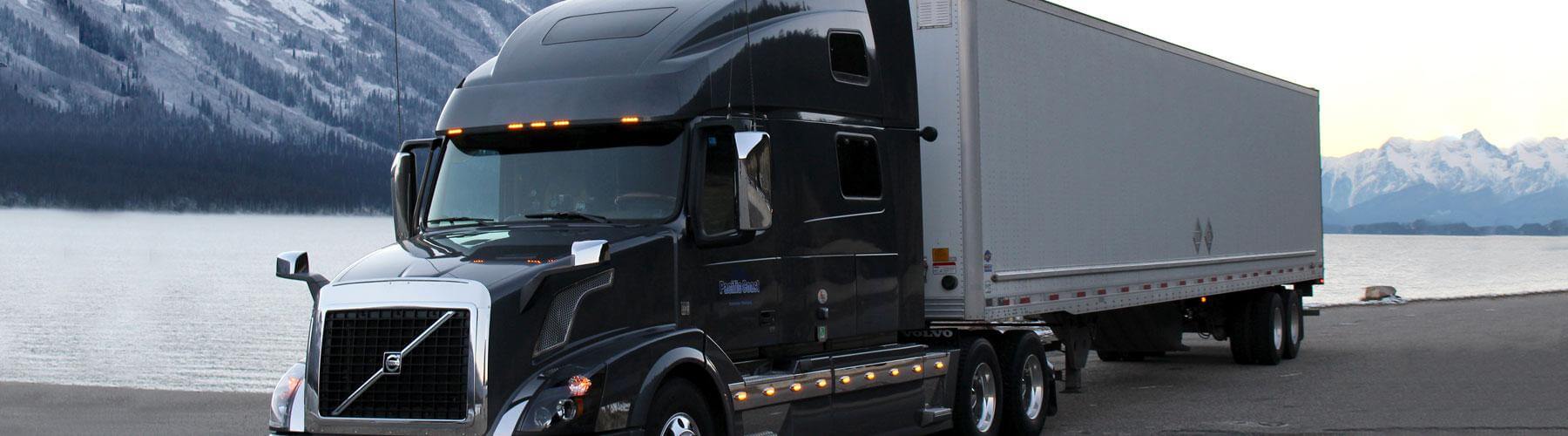
In transit the equivalent is a logger travelling with the load and a pre-trip verification that the unit actually holds temperature before product goes in. A carrier with its own transportation and logistics operation, running heated and refrigerated equipment it maintains itself, is in a position to verify that rather than assume it.
What a Receiving Check Should Cover
The receiving dock is where a problem is either caught or inherited, and a short standard check catches most of it.
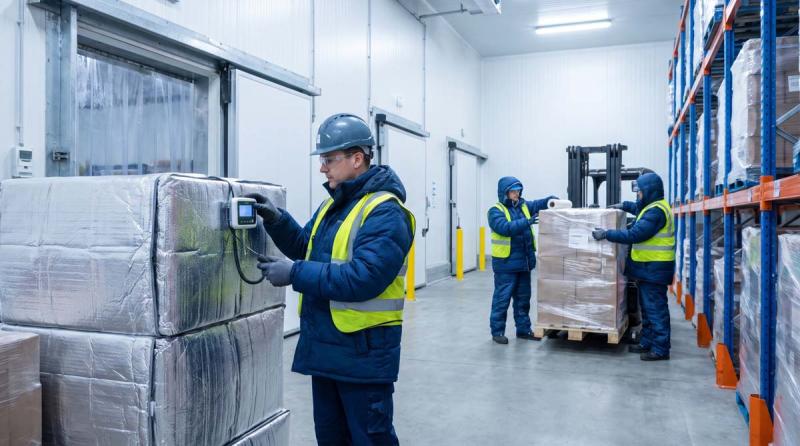
Record the trailer temperature on arrival before the doors are fully opened. Take product temperature from several points in the load rather than one, because the pallets at the doors and on the top tier see the largest swings. Download or read the logger if one travelled with the load. Note the condition of the seal and the load. And record all of it against the shipment, so that if a problem surfaces later the evidence exists.
Where a reading is out of range, the product should be held rather than received into sellable stock while the assessment happens. That decision has to be made in advance, with a documented threshold, because making it in the moment under pressure from a waiting driver produces the wrong answer.
Pallet Position Matters More Than People Expect
Within a single load or a single storage area, conditions are not uniform.
The outer cartons on a pallet, the top tier and anything near a door experience far more variation than product in the middle of a stacked load. In a trailer, the area near the doors is the most exposed and the area directly in front of the refrigeration unit can be the coldest. In storage, proximity to a dock door, an exterior wall or a heat source changes local conditions.
The practical responses are straightforward. Load patterns that allow air circulation rather than blocking it. Insulated covers or pallet shrouds for sensitive product in exposed positions. Not placing temperature-sensitive stock against exterior walls or beside doors. And mapping the facility so that it is known where the variable areas are rather than assumed to be uniform.
Documentation Is What Protects You Afterwards
Two situations make the record-keeping worth the effort, and both arrive without warning.
The first is a claim. Product damaged by a temperature excursion in transit is recoverable from a carrier only with evidence of what happened and when. Without the logger data and the receiving record, the loss sits with whoever owns the product.
The second is a recall or a quality investigation. Being able to identify which lots were affected, where they went and when, is what determines whether a recall is narrow or total. A business that cannot narrow it has to recall everything, and the difference between those two outcomes is usually larger than the entire cost of the monitoring programme.
For regulated categories the documentation is not optional. Food grade warehousing and healthcare warehousing both carry traceability and record-keeping expectations that exist independently of any commercial consideration.
What to Ask a Provider
If you are placing temperature-sensitive product with a third party, the questions that matter are specific rather than general.
What temperature ranges are actually maintained, stated as numbers rather than as a category. How is temperature monitored, how often is it logged, and who receives an alarm overnight. What does backup power cover and for how long. What is the documented procedure when a reading goes out of range. What is checked on receiving and is it recorded. Are dock doors sealed. And how long are records retained.
A provider who answers those immediately is running a controlled operation. A provider who has to find out is answering a question they have not been asked often enough.
Talk to Us
Pacific Coast Distribution has handled warehousing and transportation since 1999, from our Langley facility at 27433 52nd Avenue and our Calgary site in Rocky View, with SQF and HACCP certification, temperature-controlled storage space and heated and refrigerated trucks running under our own control.
If you are holding product that cannot take a swing in either direction, tell us what it is and what range it needs, and we will tell you honestly what we can hold it at. Call 604-888-8489, toll free 877-999-8489, or get in touch.


